01
AI编程AI-assisted Coding
怎样让作品按我们的想法运行?How can we make it behave as intended?
与 AI 一起编写程序,读懂逻辑、检查代码,再测试实际效果。Write code with AI, understand its logic, check it and test what it actually does.
程序与交互Code & interaction
从四年级的小学生到八年级的初中生,我们因为对科技的好奇和对创造的热爱走到一起。我们爱玩游戏,也想设计自己的游戏;喜欢新奇的装置,也想亲手做出自己的作品;关注生活中的小麻烦,也想用科技找到解决办法,让创意真正派上用场。From Grade 4 primary school students to Grade 8 middle school students, we share a curiosity about technology and a love of creating. We love playing games—and want to design our own. We enjoy discovering new gadgets—and want to build our own creations. We notice everyday problems—and want to solve them with technology, putting our ideas to real use.
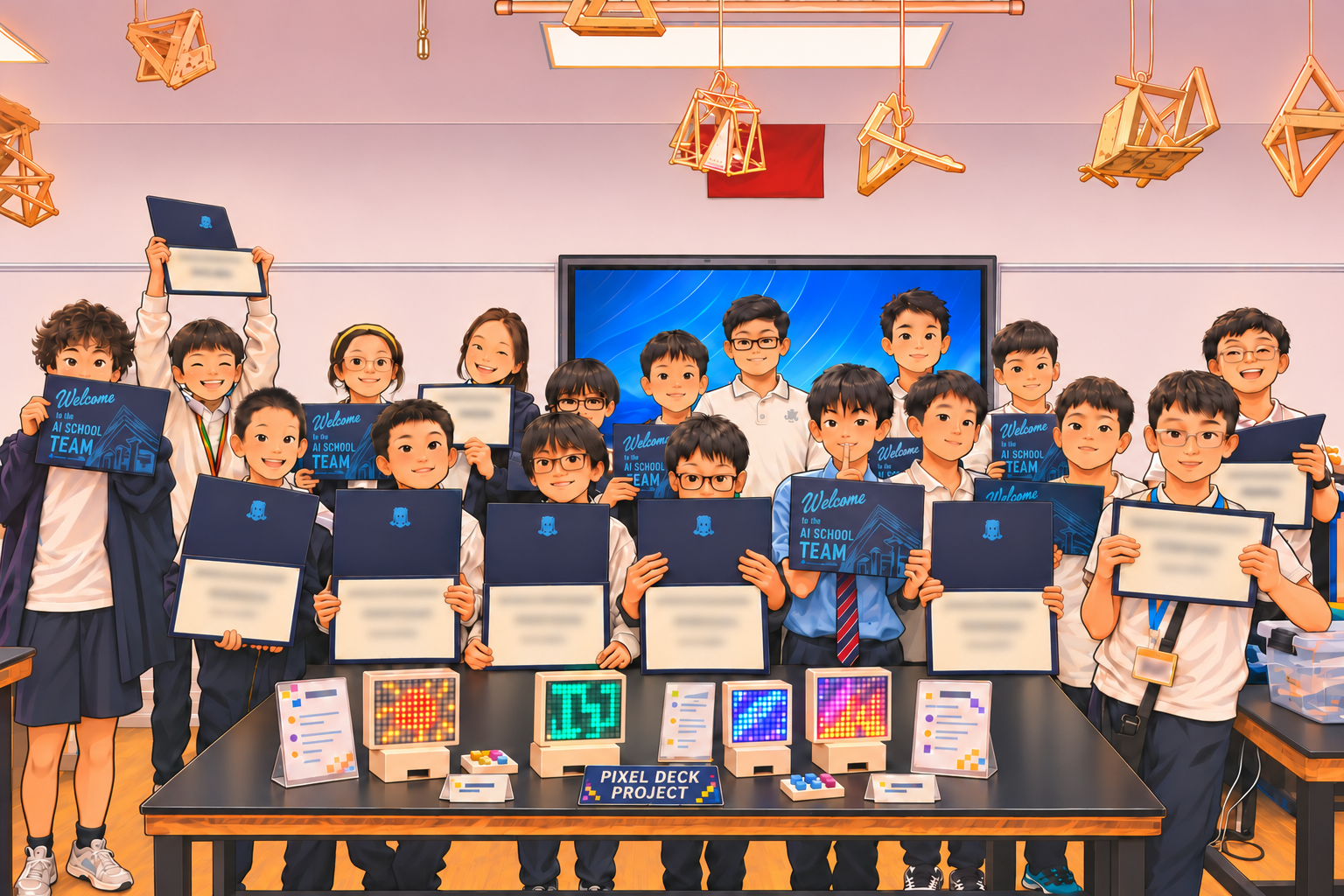
围绕一个真实项目,通过 CCA、ECA 与集训持续推进,经历调研、原型制作、测试与展示。One real-world project develops through CCA, ECA and intensive training, covering research, prototyping, testing and presentation.
面向 G4–G8 选拔,按年级分两支小队开展训练。Selected from Grades 4–8 and organised into two training squads by grade.
行业专家提供技术与项目指导,校内导师跟进日常训练与学业安排。Industry experts guide technical and project development. School mentors support regular training and academic commitments.
在 AI Lab,把设计变成 3D 打印或激光切割的零件,用电子元件与程序让作品动起来。学校提供项目材料,支持我们制作、测试,再改进。In the AI Lab, we turn designs into 3D-printed or laser-cut parts and bring creations to life with electronics and code. School-provided project materials support making, testing and refining.
01 · 首次外展OUR FIRST EXHIBITION
建队仅六周,上海赫贤AI校队带着自己的作品,参加了外滩 Maker Faire 2026。这是校队第一次面向校外公众展示。
Just six weeks after the team was formed, HDSH AI School Team brought its own creations to Maker Faire 2026 on the Bund—its first exhibition for an audience beyond school.
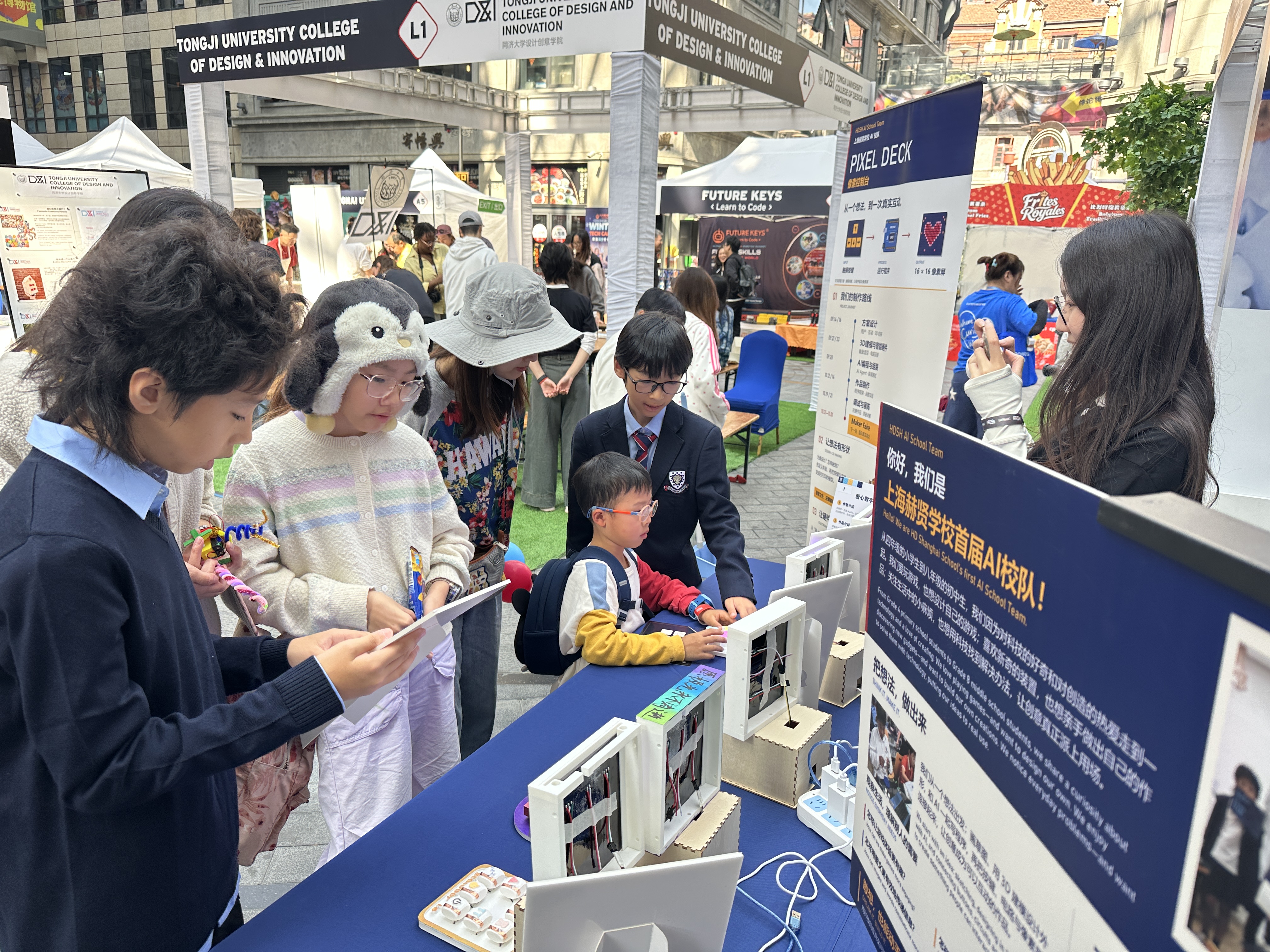
02 · 学生的展台A SHOWCASE OF STUDENT WORK
在这次活动中,校队是平均年龄最小的参展团队,也是现场唯一一个展品全部由学生作品组成的展台。学生在现场演示、讲解设计与操作方式,邀请观众体验自己的创作。At this event, the team had the youngest average age among exhibiting groups and the only booth made up entirely of student-created exhibits. Students demonstrated their creations, explained their designs and invited visitors to try them.
位观众参与作品投票Visitors voted for their favourite student creations
这次,我们带去了什么?What did we bring to the exhibition?
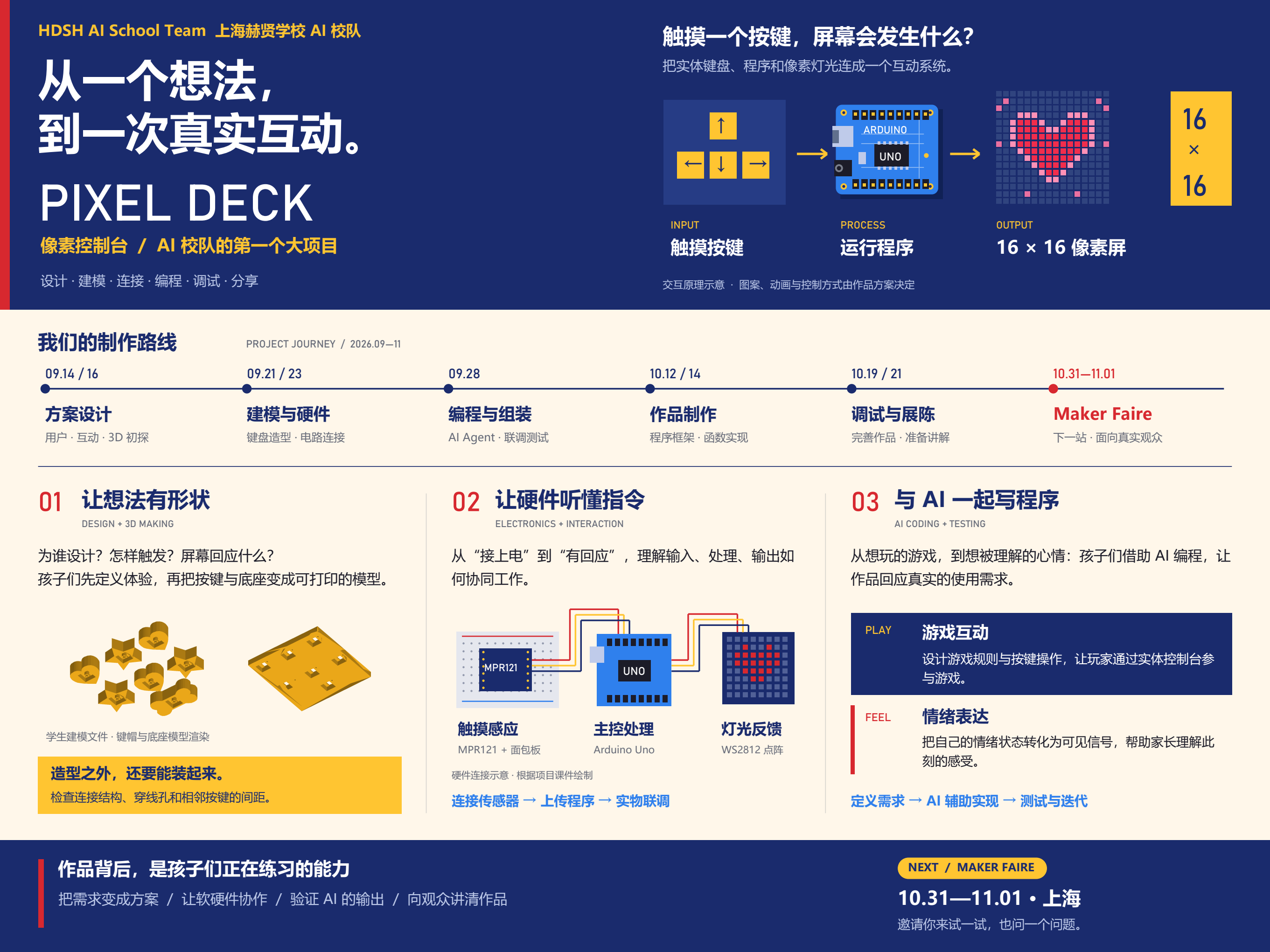
PIXEL DECK 是校队此次参展的项目:一套把实体按键、程序和像素灯屏连接起来的互动装置。学生通过设计外形、编写程序与组装电路,把自己的创意做成观众可以上手体验的作品。PIXEL DECK was the project the team brought to this exhibition: an interactive device connecting physical buttons, code and a pixel display. Students designed the form, programmed interactions and assembled circuits to create work visitors could try.
屏幕由 16 × 16 个灯点组成,能够显示像素图案,并按程序响应按键操作。A grid of 16 × 16 lights displays pixel graphics and responds to button presses as programmed.
完成训练并通过考核后,计划支持每人每年参与 2 轮比赛——围绕同一个项目打磨成熟再参赛,首年重在完整参赛经历与高质量作品集。After training and assessment, each member may enter two rounds a year — one project polished all year; year one is about the experience and a strong portfolio.
2025 · 去年活动回顾Last year's event
让学生的探索与作品,在校园里被看见。Making students’ ideas and projects visible on campus.
这段影像记录了去年校内 Day of AI 活动中,学生的 AI 探索与交流。Footage from our 2025 school Day of AI, showing students’ exploration and discussion.
每周固定训练,持续打磨一件有真实用户的作品——选题就来自校园与生活。Weekly training polishing a work with real users — topics come from campus life.
每遇到一个问题,就多学会一种解决办法。Each challenge gives us another way to solve problems.
怎样让作品按我们的想法运行?How can we make it behave as intended?
与 AI 一起编写程序,读懂逻辑、检查代码,再测试实际效果。Write code with AI, understand its logic, check it and test what it actually does.
怎样让别人一看就会用?How can we make it easy to use?
把需求变成功能,设计按钮、界面与操作顺序,再请人体验。Turn needs into features. Design controls, interfaces and interactions, then invite people to try them.
怎样让按钮、灯光和传感器一起工作?How can buttons, lights and sensors work together?
连接元件、检查线路,让输入信号变成作品看得见的响应。Connect components and check circuits to turn input signals into visible responses.
怎样让零件装得上、结构撑得住?How can parts fit and structures hold?
测量尺寸、建立 3D 模型,制作并调整外壳、支架与连接结构。Measure, model in 3D, make and refine housings, supports and joints.
我们解决的是谁的问题?Whose problem are we solving?
观察、提问、记录使用过程,用真实反馈帮助团队确定下一步。Observe, ask and document how people use the work. Let their feedback guide the next step.
从导师指导到小组协作,记录学生把想法变成作品的过程。From mentoring to teamwork, these classroom moments show students bringing their ideas to life.
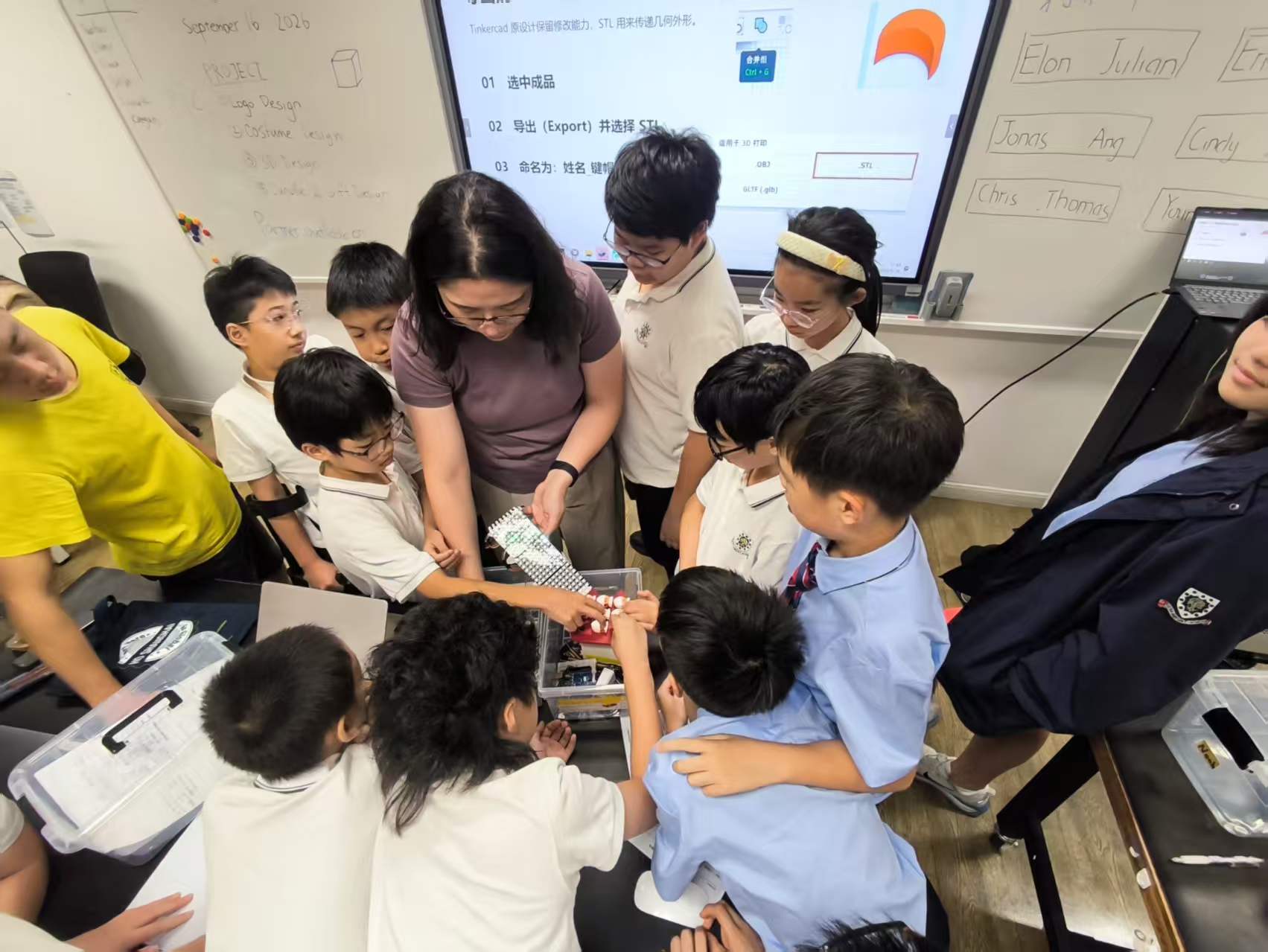
从身边的问题开始,听听别人需要什么。Start with everyday problems. Listen to what others need.
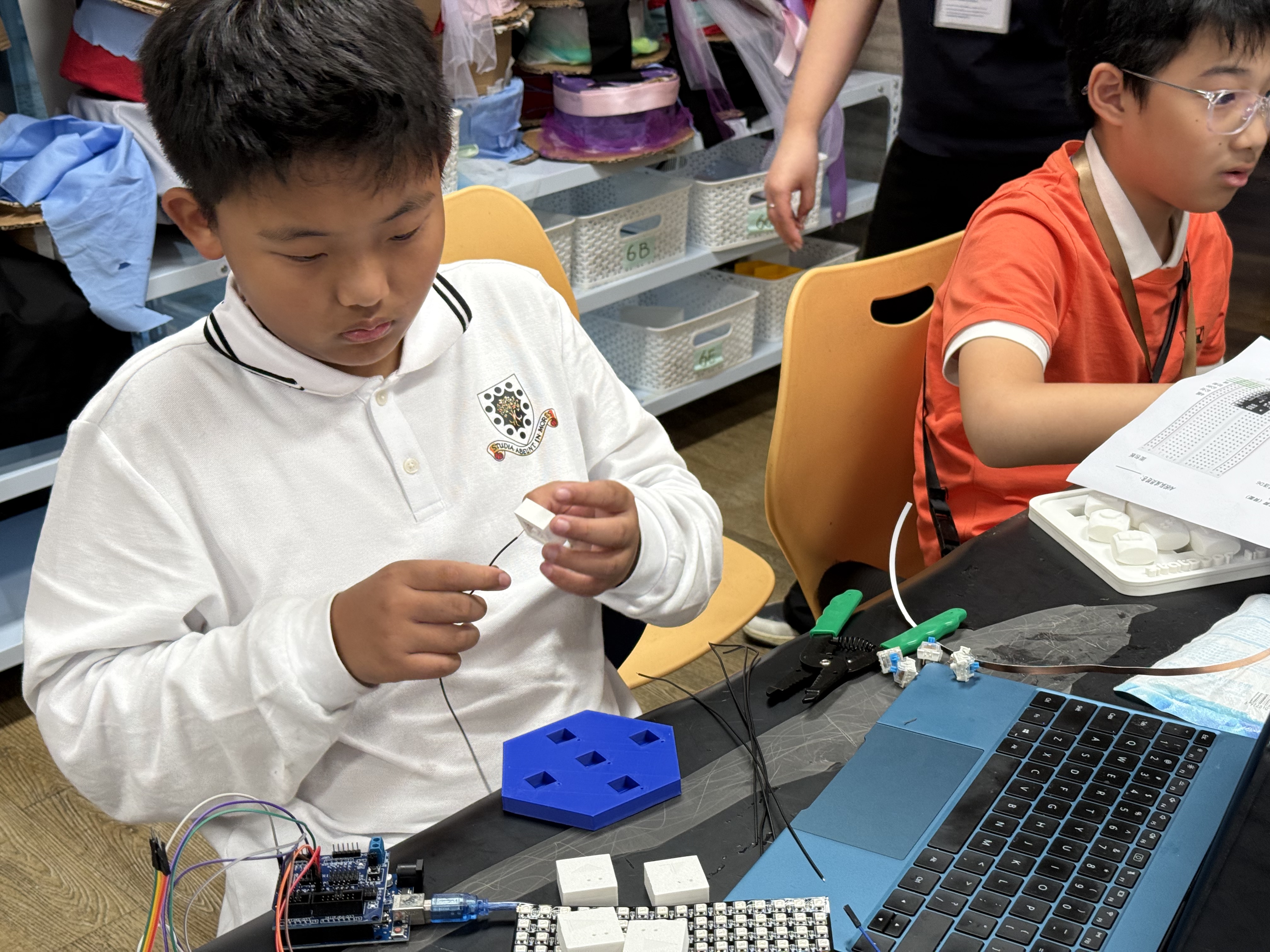
画草图、做模型、写程序,让想法有了可以试的样子。Sketch, model and code. Give an idea a form we can try.

检查代码与接线,试一试,再一起想办法做得更好。Check the code and connections. Test, discuss and make it better.
一起试,再试一次。Try. Test. Grow.
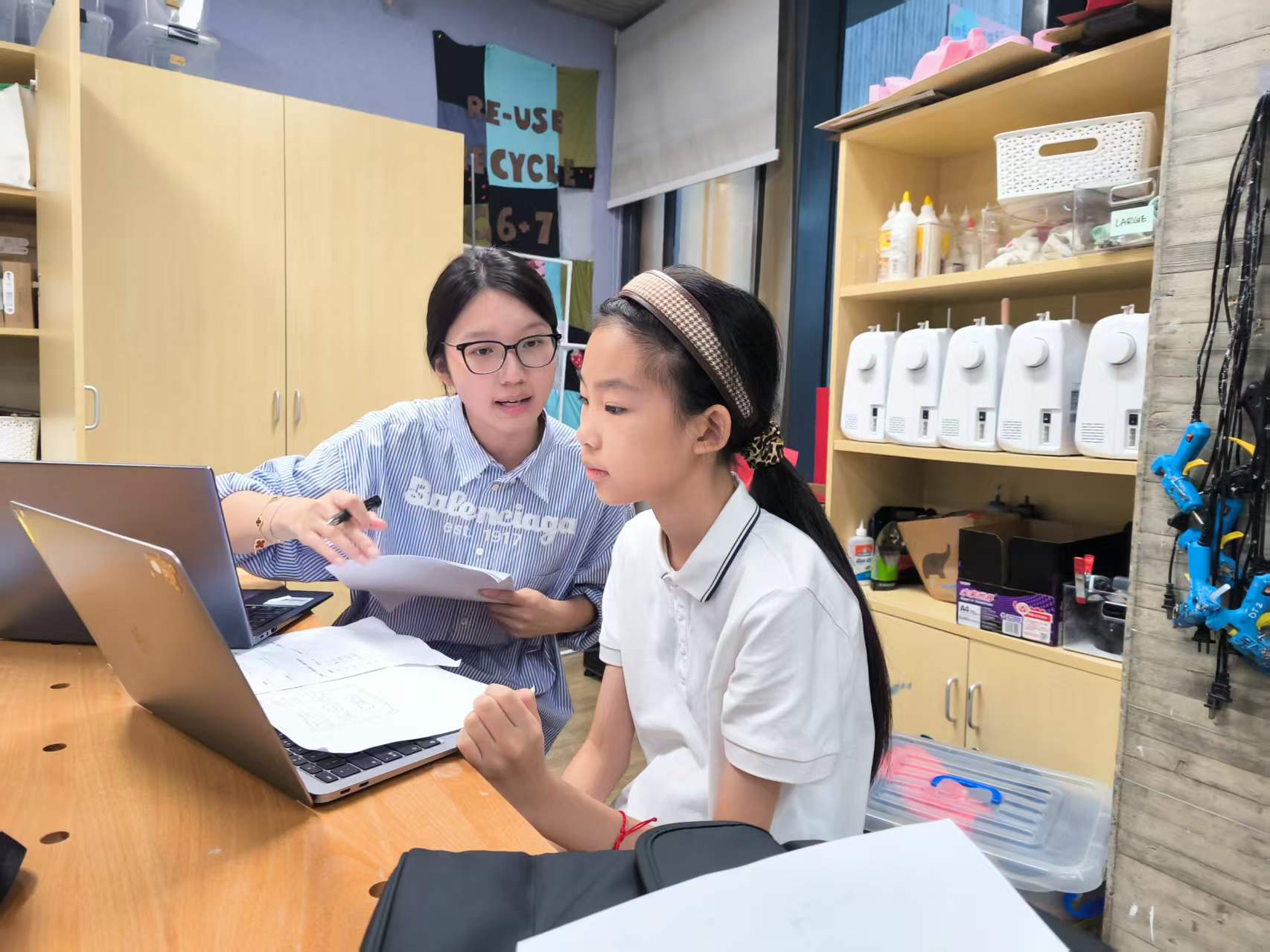
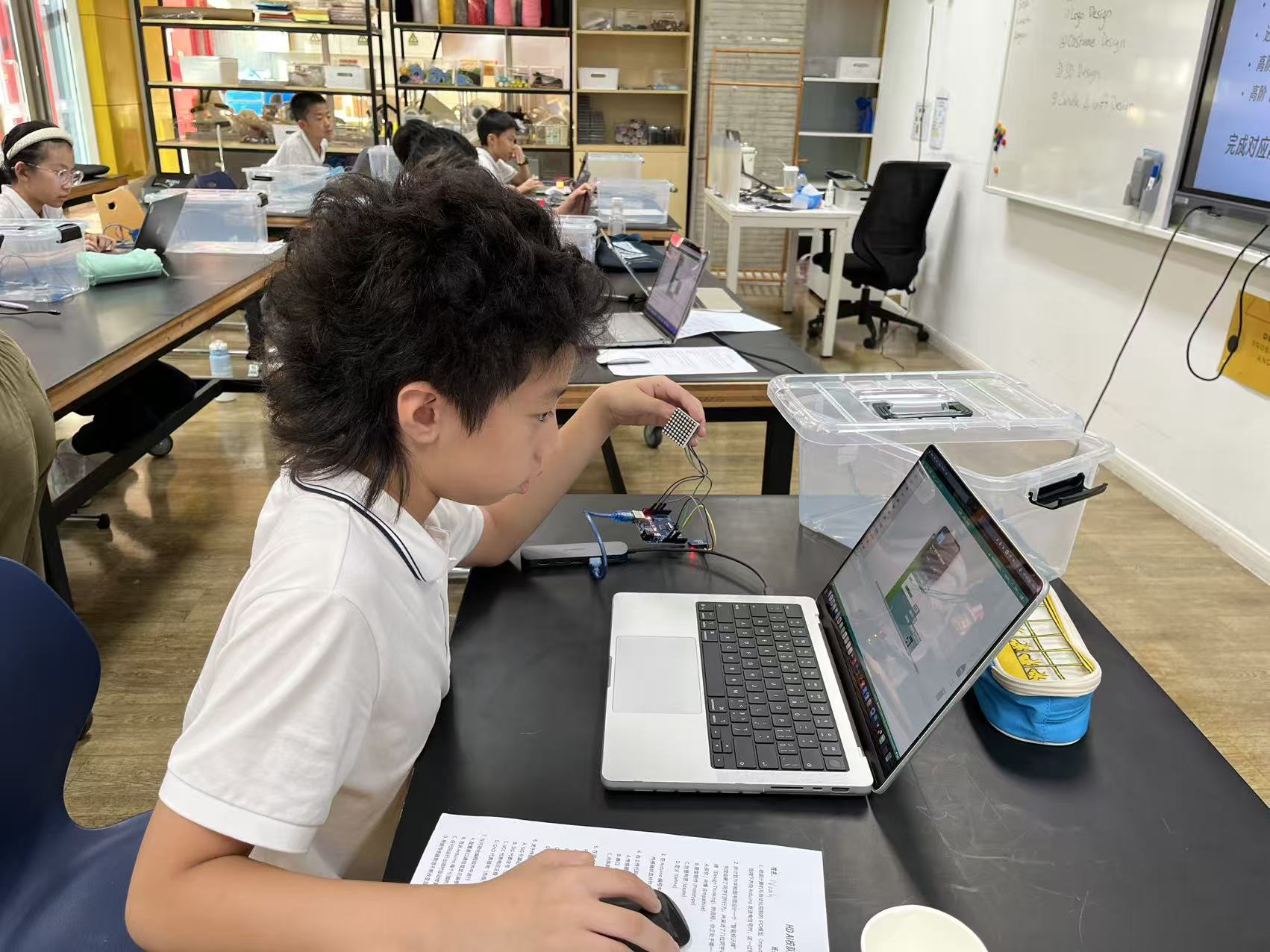
分两支小队、小队制带教——确保每个孩子都被看见、每个项目都被打磨。Two small squads with small-group mentoring — every child seen, every project refined.
Joyce 刘珺婕(CuriooWorks 创始人 & CEO,前蔚来座舱体验负责人、frog 设计副总监)领衔,Nomi、Nick 等覆盖创意编程、3D 打印、机械电子与 AI 产品。Led by Joyce Liu, CuriooWorks founder & CEO, formerly NIO cockpit experience lead and frog associate design director. Nomi, Nick and fellow specialists cover creative coding, 3D printing, mechatronics and AI products.
Annie(斯坦福教育数据科学硕士)、Christine(哈佛学习设计硕士)。Annie: master’s in Education Data Science, Stanford University. Christine: master’s in Learning Design, Harvard University.
上海赫贤学校 · AI 项目组HD Shanghai School · AI Team
2026 年 6 月June 2026